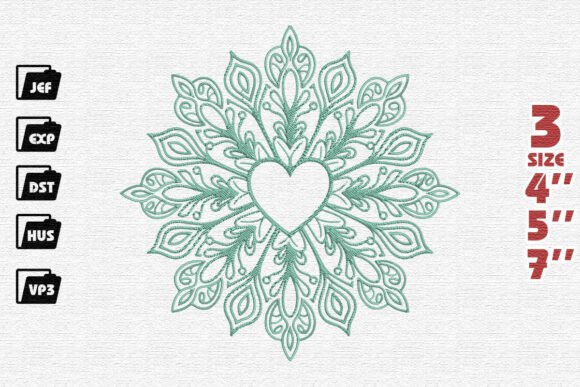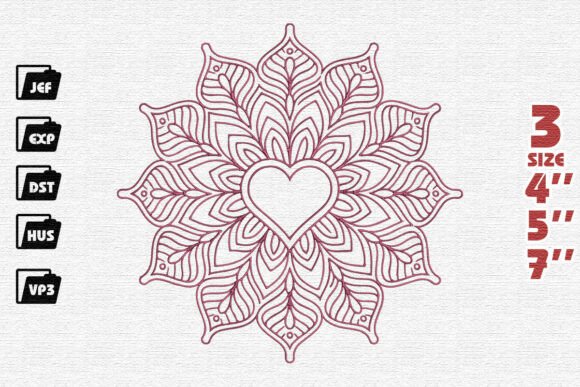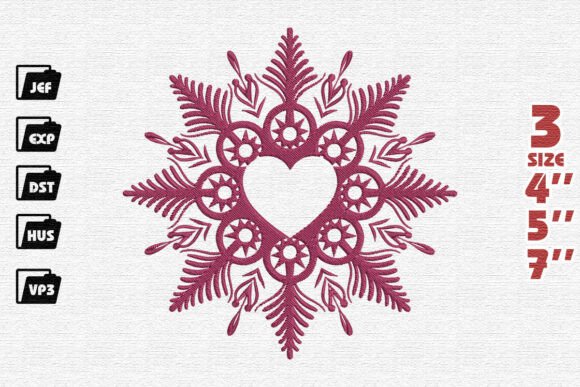
Mandala Embroidery – Satin Stitch 3
A Designer’s First Impression: Grace, Symmetry, and Quiet Confidence
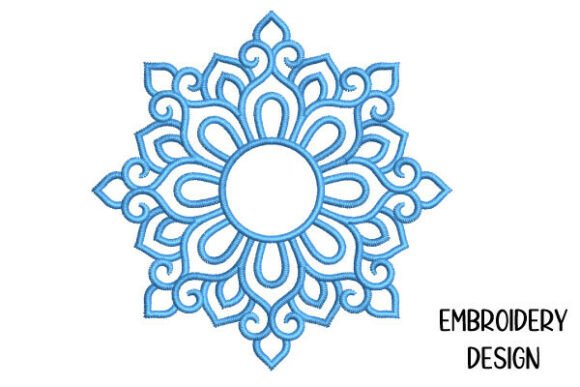
When I opened Mandala Embroidery – Satin Stitch 3 on my embroidery software, what struck me first wasn’t complexity—it was composure. This isn’t a busy mandala shouting for attention. It leans into the quiet power of symmetry and deliberate spacing, with satin stitch strokes that flow like inked calligraphy rather than rigid geometry. The design breathes. That matters—especially when you’re stitching it onto something tactile and personal: a baby blanket, a linen apron, or a premium tote bag meant to last seasons.
Where It Lives Naturally in Real Projects
Mandala Embroidery – Satin Stitch 3 feels built for intentionality—not filler. I tested it across several real-use scenarios: a cotton-linen blend kitchen towel, a medium-weight organic sweatshirt, and a structured twill cap. On the towel, the satin stitch held crisp definition without puckering. On the sweatshirt, it retained softness thanks to balanced stitch density—no stiff “plastic” halo around the motif. And on the cap? With proper hooping and light cutaway stabilizer, the center remained smooth and centered—even over the curved crown.
This isn’t an applique design or a layered fill-stitch explosion. It’s a focused, single-style statement. That makes it ideal for minimalist branding, nursery decor where subtlety reads as care, or handmade gifts where elegance signals thoughtfulness—not just effort.
Performance Notes Across Common Surfaces
- Tote bags & pillow covers: Works beautifully on medium-weave canvas or duck cloth. Satin stitch holds clean edges without excessive underlay—just enough support to prevent thread pull on seams.
- Baby blankets & swaddles: Tested on 100% cotton interlock. No snagging or stiffness. Gentle wash cycles post-stitching showed zero fraying or distortion—critical for heirloom-adjacent items.
- Caps & curved surfaces: Requires careful hooping and minimal stabilizer (tear-away + light cutaway combo). The mandala’s radial balance helps distribute tension evenly—fewer skipped stitches near the curve’s apex.
- Dark fabrics: Satin stitch shines here—if your thread contrast is intentional. A matte black base with deep navy or charcoal thread gives depth; avoid near-matching tones unless aiming for tonal subtlety.
- Stretchy knits: Not recommended without significant stabilization. The design’s fine satin lines rely on fabric stability—use only on stable knits (e.g., pique or heavy jersey) with proper backing.
What It Adds to Your Handmade Product—and Your Brand
Using Mandala Embroidery – Satin Stitch 3 does more than decorate—it elevates perception. Customers scrolling Etsy or browsing a craft fair notice the difference between “machine-made” and “designed with care.” That refined satin stitch tells a story: this item was chosen, not just assembled. It supports brand consistency for small businesses building a signature aesthetic—think muted palettes, natural fibers, and mindful gifting.
In product photography, the mandala’s symmetry creates instant visual harmony. Centered on a cream linen pillow cover or stitched low on a charcoal sweatshirt hem, it draws the eye without competing. That translates directly to customer engagement: longer dwell time, fewer scroll-pasts, higher perceived value.
For digital sellers, it’s also a strong candidate for printable mockups. Its clean lines scale well from 3” to 5”, making it adaptable across listing thumbnails, social banners, and wholesale line sheets.
Practical Embroidery Considerations Before You Stitch
Before committing to a customer order or bulk production, treat Mandala Embroidery – Satin Stitch 3 like any professional embroidery file—test, verify, refine:
- Always test on scrap fabric matching your final substrate—especially for nap, stretch, or texture.
- Review stitch density visually in your software. Satin stitch can compress in tight curves; zoom in to confirm no overlapping or unintended gaps.
- Confirm hoop size compatibility. While not specified in the product description, its balanced proportions suggest suitability for standard 4×4" or larger hoops—verify before nesting multiple units.
- Compare thread color contrast on both light and dark fabric mockups. Satin stitch reflects light differently—what reads clearly on white may recede on oatmeal.
- Use appropriate stabilizer: light cutaway for knits, tear-away for stable wovens, and optional topping (like water-soluble film) for napped or fuzzy surfaces.
- Inspect small details post-stitch. Check inner petals and outer rings for stray thread ends or minor looping—common in satin transitions but easily trimmed.
- Review licensing terms on Creative Fabrica. Confirm permissions for commercial use, especially if selling finished products on Etsy or at local markets.
Honest Fit: Who Should Reach For This Design?
Mandala Embroidery – Satin Stitch 3 suits designers who value restraint over redundancy. If your work centers around slow-made goods, botanical or spiritual themes, or elevated everyday objects—this fits. It’s less ideal for high-volume apparel shops needing ultra-fast stitch-outs or designs optimized for dense fill-stitch speed.
It’s also not a “plug-and-play” for beginners unfamiliar with satin stitch behavior—thread tension, needle type (size 75/11 works well), and fabric prep all influence outcome. But for intermediate+ embroiderers who understand how satin stitch responds to grain, nap, and stabilizer choice, it’s a quietly powerful tool.
Ultimately, Mandala Embroidery – Satin Stitch 3 earns its place not by being flashy, but by being dependable—refined enough for gifting, resilient enough for daily use, and distinctive enough to carry your brand voice without saying a word.